

Break open a block of expanded polystyrene and there’s barely anything there. A lattice of sealed cells, each one holding a pocket of air, with a thin plastic framework holding the whole arrangement together. Roughly two percent solid material. The rest is air. It sounds like something that would collapse under a firm handshake. Then you find out civil engineers bury it under highways on purpose.
Highway Duty
Road builders use large blocks of it as fill, mostly in spots where the soil underneath can’t handle weight. Bridge approaches, embankments, slopes that want to slide. The industry term is geofoam. The logic comes down to mass. Pile tons of soil onto soft ground and the ground gives. This means pavement cracks and settles and gets torn out again in five years. Replace that soil with foam and you keep the shape and elevation while removing almost all the weight. Compressive strength still handles traffic loads fine, which is the part that trips people up. Some installations have been in the ground since the eighties. Still holding.
The Job Most People Know
Construction uses more of it than any other industry. Rigid board behind siding, insulated concrete forms and roof assemblies. Then you have foundation panels and sheathing. It all goes back into the air. Still air resists heat transfer, and sealed cells prevent circulation. Therefore, the foam traps air like a permanent blanket. Nothing degrades and nothing escapes. Nothing has to be maintained either. Low water absorption helps too, which is why it ends up below grade where damp conditions are simply a fact of life.
Shipping Things That Break
Most people encounter this material while prying it out of a box. Appliance corner blocks and electronics trays. Not to mention cold chain containers for medical shipments. Impact protection functions by having the cells crush and soak up energy instead of passing it along. Rather than moving straight through to the product, the shock waves expand and spread out as they travel. Add insulation, and these containers can keep temperature-sensitive items stable for days without power. This is super important for vaccines, lab samples, and organs being shipped nationwide. One material, two jobs, almost no weight added to the freight bill.
What Molders Watch For
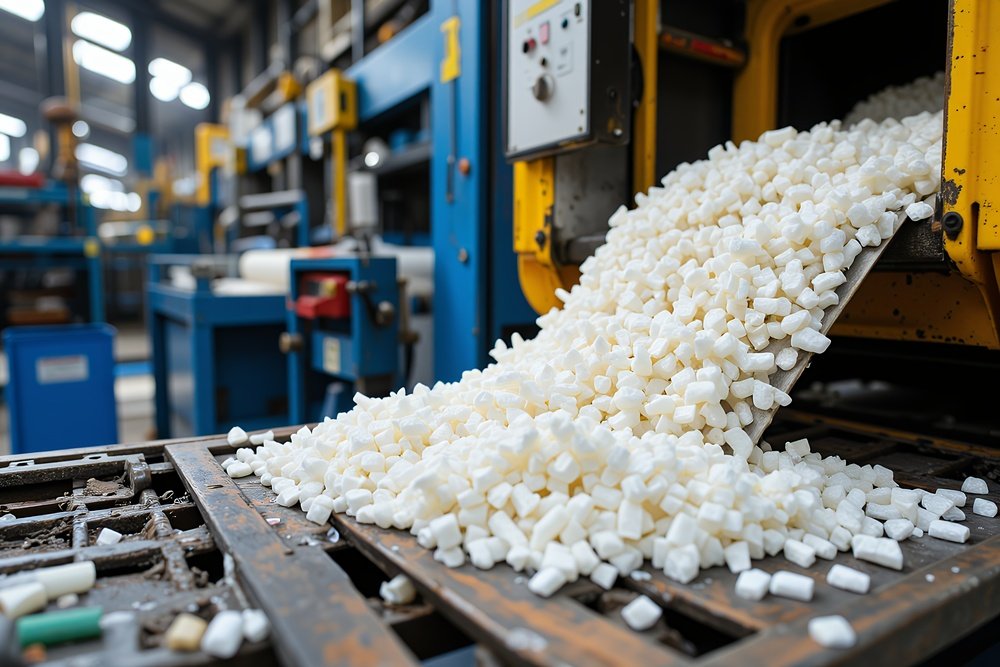
Companies that mold this stuff live on tight margins and tighter schedules. Thus, bead quality decides whether a week runs smooth or ugly. Size distribution has to stay consistent. Expansion behavior can’t drift between lots. Partnering with an EPS bead manufacturer with bulk pricing helps keep raw material costs steady across long runs. Companies like Epsilyte back molders with resin grades built for insulation and protective packaging. Not forgetting geofoam applications also. They also have plants positioned around the country so deliveries don’t sit in transit. Predictable input, predictable output.
The Recycling Conversation Moved On
For years the knock against this material was that nobody recycled it. Fair criticism once. Less fair now. Drop off sites, buyback programs, and densifying equipment have spread. Recovered foam also gets turned into picture frame molding, exterior trim, garden products, and fresh foam stock. The real obstacle was never worthlessness. It was that hauling something made of air costs more than the material returns, and densifiers compress it into solid blocks worth the trip. Still plenty of ground to cover. The situation just isn’t what the old arguments describe.
Conclusion
Weight gets mistaken for strength. With this material, the lack of weight is precisely what makes it work, because every useful property traces back to air held motionless inside sealed cells.Keeping houses warm. Supporting roadways. Carrying organs across three time zones at the right temperature. Decent résumé for something you can toss across a room.
Read More: Why Fewer Parts Can Mean More Reliable Defense Systems